Gable Wall repair in london

Gable Wall Repair in London: What you need to know

Gable walls are an essential load bearing component of many buildings in London, providing stability and and support to the roof rafters and tiles. Over time, these walls can deteriorate due to various factors such as weathering, moisture, and structural movement. It is crucial to understand the importance of gable wall repair in London to maintain the structural integrity of the building.

Neglecting gable wall issues can lead to further damage, compromising the safety and stability of the entire structure.Therefore, timely and effective gable wall repair is essential to ensure the longevity and safety of the building. Gable wall repair is not only about fixing visible damage but also addressing underlying issues that may compromise the structural integrity of the wall.

Professional assessment and repair of gable walls are crucial to identify and rectify any potential problems before they escalate. By understanding the significance of gable wall repair, property owners can take proactive measures to address any issues and ensure the long-term stability of their buildings.

Summary

  • Gable wall repair is crucial for maintaining the structural integrity and aesthetic appeal of your property in London.
  • Common issues with gable walls in London include water damage, cracks, and deterioration of mortar, bricks and the wall pulling away from the main building.
  • When looking for a professional for gable wall repairs, it’s important to consider their experience, qualifications, and reputation.
  • Cost considerations for gable wall repair in London may include materials, labour, and any additional structural work required.
  • The process of gable wall repair in London typically involves an assessment, preparation, repair work, and finishing to ensure the longevity of the repair.


Common Issues with Gable Walls in London

Exterior Wall Pulling Away From Main Building

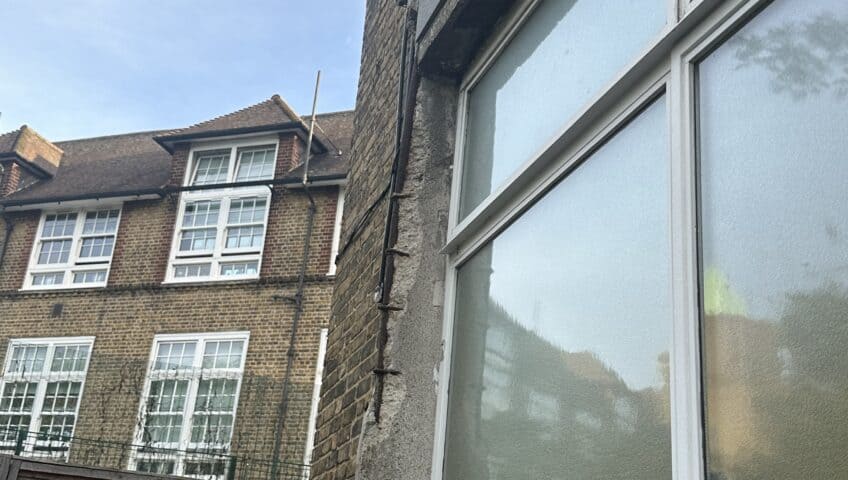
On Victorian London Property’s the side flank gable wall has a tendency to pull away from the main structure of the building, this due to insufficient lateral restraint, tying the wall to the main building.

Brickwork Deterioration

One prevalent problem is brickwork deterioration, which can be caused by exposure to harsh weather conditions, moisture penetration, or poor construction practices. This deterioration can lead to cracks, spalling, and overall weakening of the gable wall.

Mortar Joints and Flashing Issues

Additionally, inadequate or deteriorating mortar joints can contribute to the instability of the wall, requiring professional repair to prevent further damage. Another common issue with gable walls in London is the presence of damaged or deteriorating flashing. Flashing is a crucial component that prevents water infiltration at the junctions between the gable wall and the roof.

Consequences of Neglect

When flashing becomes damaged or ineffective, it can lead to water seepage, causing moisture-related issues such as dampness and mould growth within the building. Identifying and addressing these common issues with gable walls in London is essential for maintaining the structural integrity and longevity of the building.

Finding the Right Professional for Gable Wall Repairs

When it comes to gable wall repairs in London, finding the right professional is paramount to ensuring quality workmanship and long-term structural stability. It is essential to engage a reputable and experienced contractor or structural engineer who specialises in gable wall repairs. A qualified professional will conduct a thorough assessment of the gable wall, identify underlying issues, and recommend appropriate repair solutions tailored to the specific needs of the building.

Property owners should seek professionals with a proven track record in gable wall repairs, preferably with relevant certifications and accreditations. Additionally, obtaining references and reviewing past projects can provide valuable insights into the expertise and reliability of potential contractors. By choosing the right professional for gable wall repairs, property owners can have confidence in the quality of work and the long-term stability of their buildings.

Cost Considerations for Gable Wall Repair in London

The cost of gable wall repair in London can vary depending on the extent of damage, the size of the gable wall, and the specific repair requirements. Factors such as access to the gable wall, material costs, and labour expenses also contribute to the overall cost of repairs. Property owners should budget for potential additional expenses that may arise during the repair process, such as addressing underlying structural issues or implementing preventive measures to avoid future damage.

It is advisable to obtain a quote from reputable professional like London structural repairs  for gable wall repairs. While cost considerations are important, it is equally crucial to prioritise quality and expertise when selecting a contractor for gable wall repairs. Investing in high-quality repairs by experienced professionals can ultimately save money in the long run by preventing further damage and ensuring the longevity of the gable wall.

The Process of Gable Wall Repair in London

The process of gable wall repair in London typically begins with a comprehensive assessment conducted by a qualified professional. This assessment involves identifying the root causes of any visible damage, evaluating the structural integrity of the gable wall, and determining the most appropriate repair solutions. Depending on the findings, repair methods may include installing lateral restraint ties or straps, repointing deteriorated mortar joints, replacing damaged bricks, addressing flashing issues, or implementing structural reinforcements as necessary.

Once a detailed assessment is completed, the repair process involves careful removal of damaged materials, preparation of surfaces, and precise application of repair solutions. Professional contractors utilise specialised tools and techniques to ensure that repairs are carried out effectively and in accordance with industry standards. Throughout the repair process, attention is given to maintaining the aesthetic appeal of the gable wall while prioritising its structural stability and longevity.

Maintaining the Integrity of Your Gable Wall After Repair


Regular Inspections: The Key to Identifying Potential Issues

Regular inspections of the gable wall should be conducted to identify any signs of deterioration or potential issues that may require attention. This proactive approach enables property owners to address any problems promptly, thereby preventing further damage and reducing the risk of costly repairs.

Addressing External Factors: A Vital Component of Maintenance

Additionally, addressing any external factors that could contribute to future damage, such as improving drainage systems or protecting against weather exposure, can help maintain the longevity of the repaired gable wall. By taking these measures, property owners can significantly reduce the risk of future problems and ensure the continued stability of their buildings.

Seeking Professional Advice: Ensuring Ongoing Maintenance and Support

Property owners should also consider consulting with professionals for ongoing maintenance advice and periodic assessments to ensure that the repaired gable wall remains structurally sound. By prioritising proactive maintenance and addressing any emerging issues promptly, property owners can safeguard their investment in gable wall repairs and maintain the long-term stability of their buildings.

Common Structural Issues

Common Structural Issues We Can Help You Resolve with Helifix

Common Structural Issues For property owners in the UK, keeping buildings structurally sound is vital. Over time, various factors can cause cracks, movement and instability leading to structural issues.

Helifix is a specialist system for structural repairs. It is designed to be minimally invasive yet highly effective in fixing a wide range of structural problems. At London Structural Repairs we install Helifix systems.

Our experienced team can identify the common structural issues and recommend the most suitable Helifix solution for your needs. Let's explore some common structural problems that Helifix systems can effectively resolve:

  • Cracking: Splits in walls, floors and ceilings can be worrying. Helifix offers a range of crack stitching & tie systems. These stabilise and repair cracks. They prevent cracks from getting worse and protect the structural integrity of your building.
  • Subsidence: Uneven settling of the foundation can lead to cracking distortion and even misalignment of doors & windows. Helifix underpinning systems address subsidence. They transfer the building's weight to a more stable lower level. This effectively stops further movement and restores stability.
  • Lintel Failure: Lintels are crucial for supporting weight above doorways and windows. Over time they can deteriorate due to factors like corrosion or overloading. Helifix offers various replacement lintel systems. These are stronger and more durable. They are specifically designed to address the unique load requirements of your building.

Benefits of Using Helifix Systems

There are several advantages to using Helifix systems for these types of common structural issues:

  • Minimally Invasive: Helifix systems are designed to be installed with minimal disruption to your property. This means less mess, less hassle, and a faster turnaround time for repairs.
  • Cost-Effective: Compared to traditional repair methods, Helifix systems can be more cost-effective in the long run. They offer a durable and long-lasting solution, minimising the need for future repairs.
  • Versatility: Helifix systems are adaptable to a wide range of structural problems and property types. Whether you have a residential property, a commercial building, or a historical structure, there's likely a Helifix solution to address your specific needs.
  • Guaranteed Performance: Helifix systems are rigorously tested and have been around for a long time, ensuring peace of mind for property owners.

Why Choose London Structural Repairs for Helifix Installations?

At London Structural Repairs, we are a  experienced installer of Helifix systems. Our team of qualified professionals can assess your structural issues, recommend the most suitable Helifix solution, and carry out the installation with expertise and precision. We are committed to providing high-quality workmanship and exceptional customer service, ensuring a smooth and successful repair process.

Common Causes Of Damaged Concrete

Common Causes Of Damaged Concrete

Common Causes Of Damaged Concrete, Concrete is a durable and versatile building material, but it's not indestructible. Over time, concrete can be damaged by a variety of factors.

At London Structural Repairs, we’ve dealt with plenty of concrete walls and floors that have become damaged over time. Out of all the projects that we’ve worked on, there are some types of concrete damage that are more common than others.

Here are three common causes of concrete damage and how to prevent them:

1. Water Concrete  Damage

Water is one of the biggest enemies of concrete. When water seeps into concrete, it can cause a number of problems, including:

  • Cracking: Water can weaken the concrete, making it more susceptible to cracking.
  • Spalling: This is when the surface of the concrete starts to chip and flake off.
  • Corrosion of reinforcing steel: If the concrete is reinforced with steel, water can cause the steel to rust. This can weaken the concrete and cause it to crack.

How to prevent water damage:

  • Seal the concrete: Applying a sealant to the surface of the concrete can help to prevent water from penetrating.
  • Repair cracks promptly: Any cracks in the concrete should be repaired as soon as possible.
  • Install gutters and downspouts: This will help to direct water away from the foundation of your building.
  • Grade the soil around your foundation: This will help to prevent water from pooling around your foundation.

2. Freeze-Thaw Cycles

In cold climates, concrete can be damaged by freeze-thaw cycles. When water seeps into the concrete and then freezes, it expands. This expansion can cause the concrete to crack.

How to prevent freeze-thaw damage:

  • Seal the concrete: As mentioned above, sealing the concrete can help to prevent water from penetrating.
  • Use air-entraining concrete: This type of concrete contains tiny air bubbles that help to prevent damage from freeze-thaw cycles.
  • Insulate the concrete: Insulating the concrete can help to protect it from the cold.

3. Chemical Concrete Damage

Concrete can also be damaged by chemicals, such as acid rain, de-icing salts, and fertilisers. These chemicals can react with the concrete and cause it to weaken and deteriorate.

How to prevent chemical damage:

  • Seal the concrete: As mentioned above, sealing the concrete can help to protect it from chemicals.
  • Clean up spills promptly: If any chemicals spill on the concrete, clean them up immediately.
  • Use de-icing products that are safe for concrete.

By taking steps to prevent these three common causes of concrete damage, you can help extend the life of your concrete structures.

If you have concrete that has become damaged over time, it’s important to get the experts to help you conduct any repairs. If you’d like to talk to our team about your project, get in touch with us today.


Historic buildings

Historic Buildings The Advantages of Helifix

Historic buildings are an important part of our heritage. They tell the story of our past and provide a connection to our ancestors. However, these buildings can be susceptible to damage and decay over time. That's where Helifix comes in. Helifix is a specialist structural repair system that’s ideal for use in historic building conservation projects.

At London Structural Repairs, we use Helifix products on a range of our projects, especially when we are working on older buildings that require that extra bit of care. From cracking to lintel repairs, there are many reasons why we choose to use their products.

The Challenges of Working on Historic Buildings

Working on historic buildings can be challenging. These buildings are often complex and fragile, and any repairs must be carried out with care. Traditional repair methods can be disruptive and time-consuming. They may also damage the original fabric of the building, which is something we avoid at all costs.

The Advantages of Using Helifix

Helifix offers several advantages over traditional repair methods. Here are some of the key benefits that we find especially important with the projects we are working on:

  • Minimally invasive: Helifix systems are designed to be minimally invasive, meaning that they can be installed with minimal disruption to the fabric of the building. This is particularly important for historic buildings, which may be fragile and sensitive to damage.
  • Durable and long-lasting: Helifix systems are made from high-quality materials that are designed to last. This means that they can provide a long-term solution to structural problems, without the need for frequent repairs or replacements.
  • Versatile: Helifix systems can be used to repair a wide range of structural problems, including cracks, subsidence, and wall tie failure. This makes them ideal for use in historic buildings, which may have a variety of structural issues.
  • Aesthetically pleasing: Helifix systems can be installed in a way that is sympathetic to the original fabric of the building. This means that they can be used to repair historic buildings without compromising their appearance.
  • Cost-effective: Helifix systems can be a cost-effective way to repair historic buildings. This is because they are often less expensive than traditional repair methods, such as rebuilding or replacing damaged sections of the building.
  • Environmentally friendly: Helifix systems can be a more environmentally friendly way to repair historic buildings. This is because they often require less materials and energy to install than traditional repair methods.

If you are considering repairing  historic buildings, Helifix is a great option. It is a cost-effective, durable, and environmentally friendly solution that can help to preserve our heritage for future generations.

Warning Signs of Bowing Walls

Warning Signs of Bowing Walls: What Should You Look For?

Bowing walls are a serious structural issue that can lead to significant damage to your property if left untreated. It's important to be able to identify the warning signs of bowing walls so that you can take action to prevent further damage.

What is a bowing wall?

A bowing wall is a wall that is leaning away from the building. This can be caused by a number of factors, including:

  • Foundation problems: If the foundation of your home is settling unevenly, it can cause the walls to bow.
  • Water damage: Water damage can weaken the structural integrity of your walls and cause them to bow.
  • Poor construction: If your home is not built properly, the walls may be more susceptible to bowing.

Warning signs of bowing walls

There are several warning signs to look out for if you’re concerned that your walls may be bowing. These include:

  • Cracks in the walls: Cracks in the walls are a common sign of bowing. The cracks may be small or large, and they may be horizontal, vertical, or diagonal.
  • Doors and windows that stick: If your doors and windows are sticking, it could be a sign that the walls are bowing.
  • Gaps between the walls and ceiling: If you see gaps between the walls and ceiling, it could be a sign that the walls are bowing.
  • Visible bowing: In some cases, you may be able to see the bowing of the walls with your own eyes.

What to do if you think your walls are bowing:

If you think your walls may be bowing, it is important to act immediately. You should contact a professional structural engineer to assess the damage and recommend a course of action.

A structural engineer will be able to determine the cause of the bowing and recommend the best way to repair it. In some cases, the repair may be as simple as replacing a few bricks or boards. In other cases, it may be necessary to underpin the foundation or replace the entire wall.

If you’d like to talk in further detail about your walls, our team at London Structural Repairs would be happy to chat.

Preventing bowing walls

There are steps you can take to prevent your walls from bowing. These include:

  • Regularly inspect your home for signs of damage
  • Keep your gutters and downspouts clean and clear
  • Make sure your foundation is properly graded to allow water to drain away from your home
  • Consider installing a sump pump to remove water from your basement

By taking these steps, you can help to protect your home from the damaging effects of bowing walls.

Lime Mortar Pointing Expert

Lime Mortar Pointing Experts

London Structural Repairs are specialised Lime Mortar Pointing Experts.

What you may not realise about building work is that along with the more modern approaches to construction, there are also traditional methods that were used to build and maintain properties. One particular method that we will have seen in the past and still see now is lime mortar pointing. So, what is lime pointing and why has it been used in building work over the years?

Why was lime used?

Traditional mass-masonry walls, such as what we see in pre 1919 homes would have very much worked on the basis that any moisture that enters the wall, has the chance to escape as easily as possible. One material that has known to be able to do this the best is lime. This is because they have an interconnected pore structure, which means that the water vapour and water can travel with ease and make its way back out.

This is compared to those walls made of cement, which are more closed and will trap water within the wall and make it much harder for the water to escape. Of course, in modern times, homes are designed in such a way that concrete is fine to be used for the construction, however, those homes that pre-date 1919 are going to have lime mortar already in them and therefore any repairs need to be carried out using lime-pointing.

Why might you need lime mortar pointing Expert repairs?

There are a number of reasons why you might need to book in for lime pointing Expert repairs on your property. However there are two main ones that we see. The first one is that the lime pointing that was originally put in place has decayed over time and the time has come for it to be replaced. Mortar can decay over time due to weathering or sometimes due to poor maintenance. You can often find that blocked gutters or overflow pipes can cause damage to the masonry work and then require repairs.
You may also need to arrange for repairs if the masonry within the property has already been re-pointed, with the use of a cement based mortar which is often the case in London.

If you live in a period property then you know that you are going to need to make sure that any repair work that you have carried out on it, fits in with the traditional style and design. This means that you are going to be on the hunt for an expert who understands what it takes to best utilise some of these traditional materials and methods for the best interests of the building.

We are lime mortar pointing Experts, so if you live in an older property and want to ensure that you protect the look and charm of the building, then why not get in touch with us?


REQUEST A FREE QUOTE


building repair

Building Repair Expert? Why Is It Important to Hire a Professional

Building Repair Experts

Whether you own a residential building or an office space, Building Repair and maintenance  are imperative for all types of buildings, especially, if you are really interested in keeping them looking at their best for years to come.

Without building repair services, even the smallest of problems can quickly escalate and get out of hand, forcing you to spend a fortune on repairs and renovation. You could’ve easily avoided these had you considered timely maintenance at the right time.

As unfortunate as it sounds, the vast majority of people refuse to take building repair and maintenance services into account, causing the building to deteriorate sooner than it should. In this post, however, we will convince you about the benefits that a professional building repairs service really offers, and all of the reasons why you should consider hiring one for your buildings in London.

Why Not Give LSR A Call

Optimized Resource Allocation

The number one reason why people do not hire building repair services is because they believe that it is a waste of money, and that the tasks can easily be taken on by their employees. Unfortunately, this is a very narrow-minded approach, and essentially trivializes the time and effort that building maintenance professionals spend on the tasks that are assigned to them.

As professionals of the field, building maintenance experts do not only know how to inspect each aspect of the building, but they also know how to allocate resources efficiently and effectively, ensuring optimization.

Timely Repairs

As mentioned above, it doesn’t take long for even the minutest of repairs to be aggravated, resulting in damages that will not only cost a fortune, but also cause plenty of downtime. However, when a professional building repair services is hired, this very problem can be avoided in its entirety, leaving you with a building or property that’s always up to the mark.

With professionals of a building repair service paying regular visits to you building time and again, it goes without saying that all problems and areas that need repair will be noticed in a timely manner, preventing them from getting worse.

Check out our Services page

Seamless Experience

Needless to say, when a professional  is hired for your residential properties or office spaces in London, you are not only bound to get a seamless experience, but all problems will also be dealt with in a highly professional manner. Additionally, if repairs are to be made to the building, they will be taken care of in such a way that it looks good as new.

Convinced of the benefits of hiring a professional building repair services? Give London Structural Repairs a call today at 020 8936 7699 today to find out the different ways in which our team of professionals can help you with building repairs and maintenance and all kinds of repairs!

CONTACT US FOR A QUOTE

Stone Damage

Common Reasons for Stone Damage

Stone damage is one of the most common problems that home owners in London and surrounding areas have to experience. Since stone structures are known for having an incredibly sophisticated and elegant look, even the most minute damages can affect the property considerably when it comes to buildings that are made primarily of stone. 

Despite the various reasons that can contribute to the deterioration of stone structures, you will be glad to know that the damage is – in most cases – completely reversible, which means that professional services like London Structural Repairs can leave your buildings looking good as new. 

Interested in learning more about the most common reasons for stone damage in London and how our professionals at London Structural repairs can help? Read on as we let you in on three of the most common reasons why stone damage occurs and how we can help.


Why Not Give LSR A Call


Crystallisation of Salts

It doesn’t come as a surprise to many that stone structures often have salts in their pores and openings. Contrary to popular belief, however, the crystallization of these salts can prove to be highly detrimental to the surface of the stone structure, leaving it with visible cracks and seams, affecting the look of the stone structure or building in an extremely negative way.


Dissolution 

While many people fail to take this into consideration, certain types of stones including marbles, limestone, and dolostone can be affected by acid rain which has unfortunately become a common occurrence in most cities. When in contact with water that has been mixed with acidic elements or compounds, structures or buildings that have been created using any of the aforementioned stones or other carbonate stones will begin to deteriorate and lose their lustre and shine as a result of dissolution. 

In certain cases, cracks and seams, too, can start forming on the structure, leaving it dull and unattractive. However, by consulting a professional service like London Structural Repairs, you can have the surface of your stone structure repaired. Furthermore, our professionals will also be able to help you deal with hidden damages that may not be as prominent.


Check out our Services page


Why is it important to get the Structural Repairs carried out by a specialist?

As a home owner it is important to try and get any structural repair works to your property carried out by a specialist company, because it will save you time and money as a lot of the drawings supplied by a structural engineer can be quit complicated and hard to understand especially for a general builder who has not had any training in modern remedial repair systems.

If you have recently purchased a property or are in the process of buying one and would like help in understanding any structural defects on the property or if you would like a quotation then please contact London Structural Repairs one of Londons leading specialists structural repair companies.


Human Contact

Another reason that most people fail to take into consideration is human contact with stone buildings. Regular human contact such as walking on marble floors etc is known to deteriorate the look of stone buildings and structures. Additionally, stone structures are often more easily damaged with sharp objects compared to concrete structures, leaving them with visible lines and cracks that take away from the elegant cv finish of the stone structure. 

Fortunately for many, companies like London Structural Repairs have a team of experts that can help with any kind of stone damage. Leveraging the latest tools and techniques, our experts can not only improve the look of your stone buildings, but also deal with cracks, seams, and other stone structure problems in a professional manner, leaving your buildings looking good as new. 


Interested in stone repairs? Give us a call at 020 8936 7699 today to find out how we can help!


CONTACT US FOR A QUOTE


Structural Survey

Structural survey Benefits

What is a structural survey?

A structural survey is carried out by a firm of structural engineers. It consists of a detailed inspection from the top to the bottom of a building looking at all aspects of the building structure, for example: the condition of the roof, the types of materials used, possible areas of concern, damage to brick or stonework and damp related issues. A structural survey is the most comprehensive type of building surveys, they find potential problems and building defects which will then be put into a detailed structural survey report identifying any problems found and then a specialist structural repair company can carry out the repairs.

London Structural Repairs work closely with Structural Surveyors and engineers to help solve any defects your property may have.


Why Not Give LSR A Call


Why is a structural survey important?

A Structural survey is important for finding out what problems you have with your building, for example, if you are looking to buy a new house as an investment or to live in you may want to consider having a structural surveys carried out if: the property is of a Victorian or Edwardian period, the property is expensive, the property is more than 2 stories high, you can clearly see the property needs structural repair works i.e if it is showing signs of any cracking or movement, if the property is of an unusual construction i.e timber framed, or if you are intending on carrying out any major alterations to the property. A structural survey may help you decide whether you wish to purchase the property as is will give you an indication on how much you would need to spend in order to fix the problems.


What is a Structural Engineers Report?

Structural engineers reports are carried out by a chartered structural or civil engineer, they identify, evaluate and give recommendations to the homeowners on any problems with the foundation or the structure of their home. Within this report such problems may be uncovered: if soil erosion has occurred, if your buildings foundation is poorly constructed, or if any wood is present which may create future problems as rotting is possible.


Check out our Services page


Why is it important to get the Structural Repairs carried out by a specialist?

As a home owner it is important to try and get any structural repair works to your property carried out by a specialist company, because it will save you time and money as a lot of the drawings supplied by a structural engineer can be quit complicated and hard to understand especially for a general builder who has not had any training in modern remedial repair systems.

If you have recently purchased a property or are in the process of buying one and would like help in understanding any structural defects on the property or if you would like a quotation then please contact London Structural Repairs one of Londons leading specialists structural repair companies.


CONTACT US FOR A QUOTE


Victorian Bay Window Cracks

Victorian Bay Window Cracks

Victorian Bay Window Cracks can be a serious cause for concern

Victorian Bay Window cracks. While Victorian houses may be easily recognizable due to their unique architecture and designs, people often can’t tell bay windows apart from normal windows. Unlike normal windows, bay windows bulge outwards from the structure of the building or house. These windows are given the name bay windows because of the fact that they form an architectural ‘bay’ or a compartment which is present between architectural elements.

History of Victorian Bay Windows

The Building Act, passed in 1894, brought with it a lot of changes to the way in which buildings could be constructed. One of the most prominent changes which the Act brought was that it wasn’t necessary for windows to be in line with the rest of the structure of a building anymore.
Following the Act, manufacturers in the Victorian era took advantage of the aforementioned change. Creating bay windows, these manufacturers made the houses built after the passing of the act appear to be much larger than they actually were.
Victorian bay windows also allowed much more light to enter the house, compared to normal windows, and started being used by people of the era as an alternative to balconies.


Give us a call to help diagnose and fix your structural defects


What Causes Cracks in Victorian Bay Windows?

Much like any other type of window, cracks in Victorian bay windows are also a very common defect. However, unlike normal windows which are in line with the structure of the building, Victorian bay window cracks often have different reasons.

Most victorian bay windows was the last thing to be built on the property as the builders used the opening to bring all the materials through the property and then dug shallow foundations then built the bay window but most are not tied in properly at the junctions between the bays and the properties main walls.

Another common cause for Victorian bay window cracks is when the old wooden window frames and glass are replaced with new PVC windows. Most PVC windows are not strong enough to take the load bearings of the bays, so the window company should install bay poles to take the load but Unfortunately it is all too common for companies to leave these out which then causes damage and cracking to masonry and in some instances causing the glass in the windows to crack.

Cracks can appear in Victorian bay windows is because of poor installation. Since bay windows do not have proper foundations like the rest of the building, it takes them much longer to settle than other areas of the house. If the window is not attached to the building properly, you will notice several cracks on or around it.

Another cause of bay window cracks in Victorian style houses is movement. Since these windows are essentially just an extension of the building itself, if there is a lot of movement in the bay or near the bay window, there is a high possibility that cracks will begin to appear around the window.
Since they are comparatively much more vulnerable, Victorian bay window crack repairs are one of the major concerns of owners of Victorian style homes. Victorian bay window cracks repairs are extremely necessary too and cracks on or around bay windows should be addressed immediately since they have the potential of damaging the rest of the house at an unprecedented rate.

CONTACT US FOR A QUOTE

If you, too, need Victorian bay window cracks repaired, head over to London Structural Repairs for the services of one of Londons best and most professional companies.